
Want to understand the differences between THCa and Delta 8? This guide will explore their effects, benefits, and legal status, helping you decide which might be right for you in the context of THCA vs Delta 8.
Key Takeaways
- THCa is a non-intoxicating precursor to THC, offering therapeutic benefits without psychoactive effects, while Delta 8 THC provides a milder psychoactive experience compared to Delta 9 THC.
- Both THCa and Delta 8 THC have potential therapeutic uses, including anti-inflammatory and neuroprotective properties for THCa, and pain relief, anxiety reduction, and appetite stimulation for Delta 8 THC.
- The legal status of THCa and Delta 8 THC varies by state, although both are federally legal under the 2018 Farm Bill; THCa may be more widely accepted, while Delta 8 THC faces restrictions in several states.
THCa vs Delta 8: Effects, Benefits, and Legal Status Explained
THCa and Delta 8 THC are gaining prominence in the cannabis market. Both cannabinoids are derived from the cannabis plant and are recognized for their unique properties. THCa, or tetrahydrocannabinolic acid, is often regarded as the non-intoxicating precursor to Delta 9 THC, the compound primarily responsible for the psychoactive effects of cannabis. When exposed to heat, THCa converts into Delta 9 THC, thus affecting its psychoactivity. This conversion process highlights one of the key differences between THCa and Delta 8 THC, the latter being a psychoactive cannabinoid that offers a milder high compared to Delta 9 THC.
Their distinct chemical compositions lead to different effects. THCa is non-intoxicating, meaning it does not produce a high, making it an attractive option for those seeking the therapeutic benefits of cannabis without the psychoactive effects. On the other hand, Delta 8 THC, while also providing therapeutic benefits, is known for its milder psychoactive effects, offering a balanced experience that is less likely to cause anxiety or paranoia compared to Delta 9 THC.
Interest in these cannabinoids is growing due to their potential uses and benefits. For instance, THCa is being explored for its anti-inflammatory and neuroprotective properties, which could be beneficial for managing chronic diseases and protecting brain health. Delta 8 THC, meanwhile, is gaining recognition for its ability to provide pain relief, reduce anxiety, and stimulate appetite, making it a versatile option in the realm of medical cannabis.
Understanding the nuances between THCa and Delta 8 THC is crucial for consumers making informed choices about cannabis products as the industry evolves.
Introduction
THC, or tetrahydrocannabinol, is a well-known compound that exists in forms like Delta 8, Delta 9, and THCa. THCa, often described as the lesser-known sibling of THC, is gaining popularity for its non-intoxicating properties and potential therapeutic benefits. Unlike Delta 9 THC, which is the primary psychoactive component of cannabis, THCa does not produce a high. Instead, it offers a range of benefits without the psychoactive effects, making it an attractive option for those seeking the medicinal properties of cannabis without the associated euphoria.
Similarly, Delta 8 THC is another cannabinoid that is gaining traction within the cannabis industry. Known for its milder psychoactive effects compared to Delta 9 THC, Delta 8 THC provides a balanced experience that is less likely to cause anxiety or paranoia.
Interest in THCa and Delta 8 THC is increasing due to their unique properties and potential uses, with ongoing research uncovering more benefits and applications. This guide will delve into the intricacies of these cannabinoids, providing a comprehensive understanding of their effects, benefits, and legal status.
Understanding THCa
THCa, or tetrahydrocannabinolic acid, is a non-intoxicating compound in raw cannabis. THCa is commonly seen as a precursor to Delta 9 THC. When it is heated, THCa transforms into Delta 9 THC, which has psychoactive effects. This conversion process, known as decarboxylation, is crucial for understanding the role of THCa in cannabis products.
THCa interacts with the body differently from Delta 8 THC, providing potential therapeutic benefits without psychoactive effects. As a result, THCa is becoming increasingly significant in the cannabis market, with a growing interest in its unique properties and applications.
Chemical Structure of THCa
The chemical structure of THCa is characterized by a carboxylic acid group, which is responsible for its non-psychoactive nature. The molecular formula of THCa is C22H30O4-4, and it contains a carboxyl group as a crucial structural component. This acidic precursor is essential for its chemical identity and differentiates it from other cannabinoids.
When decarboxylation occurs, THCa loses its carboxyl group and converts into Delta 9 THC, which is psychoactive. Understanding the chemical structure of THCa is vital for comprehending its effects and potential uses in the cannabis industry.
How THCa Interacts with the Body
THCa interacts with the endocannabinoid system without producing a high. Instead, it offers potential benefits such as anti-inflammatory and neuroprotective effects. Decarboxylation, where THCa converts to THC through heat exposure, is key to understanding its interaction with the body.
Consuming raw THCa allows individuals to harness its therapeutic benefits without the psychoactive effects associated with THC. This makes THCa a valuable component in the realm of medical cannabis, providing various physiological effects without intoxication.
What is Delta 8 THC?
Delta 8 THC is a lesser-known cannabinoid with milder psychoactive effects than Delta 9 THC. It is gaining recognition for its ability to provide a balanced experience, offering a pleasant buzz without the intense psychoactive effects of Delta 9 THC. Delta 8 THC is about 12 times less strong than Delta 9 THC, making it a milder option for those seeking the therapeutic benefits of cannabis without the associated euphoria.
Products containing Delta 8 THC are increasingly available in various forms, such as gummies, tinctures, and vape cartridges, catering to different preferences and needs.
Chemical Structure of Delta 8 THC
The chemical structure of Delta 8 THC is defined by a double bond on the eighth carbon atom, whereas Delta 9 THC has a double bond on the ninth carbon atom. The molecular formula of Delta 8 THC is C21H30O2, and it lacks the acid group that is present in THCa. This subtle difference in the chemical structure results in Delta 8 THC having milder psychoactive effects compared to Delta 9 THC.
This chemical distinction helps comprehend the unique properties and effects of Delta 8 THC.
How Delta 8 THC Interacts with the Body
Delta 8 THC primarily engages CB1 receptors in the brain, causing its psychoactive effects. It also interacts with CB2 receptors, influencing its mental and physical effects. Users experience mild, calming, and euphoric sensations, making it popular for a smoother psychoactive experience.
Delta 8 THC produces a high about half as strong as Delta 9 THC, offering a balanced experience with less risk of anxiety or paranoia. This interaction with the body’s endocannabinoid system highlights the unique benefits of Delta 8 THC.
Key Differences Between THCa and Delta 8 THC
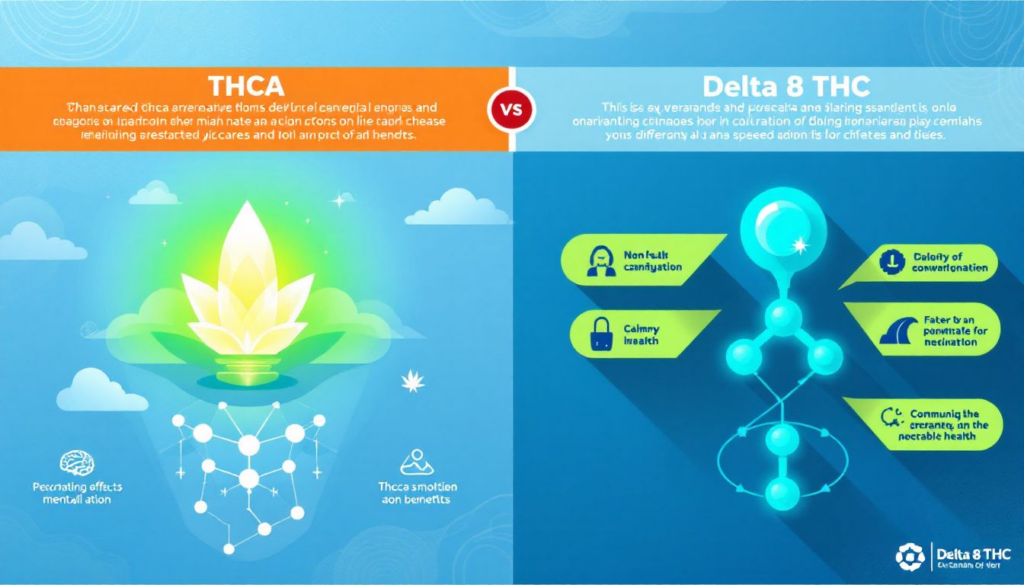
THCa and Delta 8 THC are distinct cannabinoids, each offering unique properties and effects. THCa is a non-intoxicating precursor to THC, primarily found in raw cannabis, while Delta 8 THC is a byproduct of the degradation of Delta 9 THC during the decarboxylation process. The distinct chemical makeup and interaction with the body contribute to their differing effects.
Personal preferences and desired effects are crucial in choosing between Delta 8 THC and THCa, as both offer potential health benefits. Consumption methods also affect the onset and duration of Delta 8 THC’s effects, so consumers should understand their options.
Psychoactive Effects
THCa is non-intoxicating, meaning it does not produce a high. Some users may experience slight feelings of energy or drowsiness, but these effects are minimal.
In contrast, Delta 8 THC offers a mild psychoactive experience characterized by feelings of calmness and euphoria. This makes Delta 8 THC a preferred choice for those seeking the therapeutic benefits of cannabis without the intense psychoactive effects of Delta 9 THC.
Conversion and Consumption
THCa converts to THC when exposed to heat, a process called decarboxylation. THCa must be consumed raw or converted via decarboxylation, while Delta 8 THC can be directly consumed in forms like edibles and vapes.
Vaping THCa offers a similar experience to THC vapes but is legally available in all 50 states. THCa can be used in various ways including vaping, smoking, dabbing, and consuming edibles without converting to THC.
Legal Status
THCa and Delta 8 THC are federally legal under the 2018 Farm Bill, which permits hemp-derived cannabinoids with less than 0.3% Delta 9-THC. However, the legal environment for both THCa and Delta 8 THC is complex and varies significantly depending on state regulations. Delta 8 THC faces restrictions in many states, while THCa is more widely accepted.
Consumers can typically find THCa and Delta 8 THC in dispensaries and sometimes in non-dispensary retail environments, depending on local laws.
Therapeutic Benefits of THCa
THCa is recognized for its potential therapeutic benefits, including anti-inflammatory and neuroprotective properties. Preliminary studies suggest THCa may help manage chronic diseases and protect brain health. Unlike its psychoactive counterpart, THCa offers these benefits without a high, making it appealing for medical cannabis users.
As research continues, the potential applications of THCa in treating various conditions are becoming more apparent.
Anti-Inflammatory Effects
Research on animals suggests that THCa can reduce inflammation, showing promise as a treatment for related conditions. Studies indicate that THCa may help manage inflammation-related conditions such as arthritis. Research continues to explore these anti-inflammatory benefits, showing THCa’s potential for conditions with inflammatory responses.
Ongoing research highlights THCa’s therapeutic potential in addressing inflammation.
Neuroprotective Properties
THCa has been linked to neuroprotective effects, potentially lowering proteins associated with Alzheimer’s disease. Animal studies have shown THCa’s ability to protect brain cells, making it relevant for neurodegenerative diseases like Huntington’s disease. These neuroprotective properties could lead to new therapies for diseases like Alzheimer’s and Huntington’s.
The potential for THCa to support brain health is a promising area of cannabinoid research.
Benefits of Delta 8 THC
Delta 8 THC is known for therapeutic benefits like pain relief, anxiety reduction, and appetite stimulation. It offers a milder psychoactive experience compared to Delta 9 THC, providing a balanced and pleasant buzz without the intense effects.
These benefits make Delta 8 THC versatile for various health conditions and user preferences in medical cannabis.
Pain Relief
Users often report that Delta 8 THC alleviates chronic pain. In fact, 41% of users reported using Delta 8 THC primarily for pain management. Its pain-relieving properties make Delta 8 THC valuable for those seeking therapeutic effects without intense psychoactivity.
This cannabinoid provides an effective alternative for managing discomfort and improving quality of life.
Anxiety Reduction
Delta 8 THC reduces anxiety and promotes mental calmness. Many users report feeling more relaxed and calm when using Delta 8 THC. Approximately 83% of Delta 8 THC users reported not experiencing paranoia, suggesting a milder effect compared to Delta 9 THC.
These properties contribute to Delta 8 THC’s therapeutic benefits, making it popular for a mild psychoactive experience.
Appetite Stimulation
Delta 8 THC stimulates appetite, potentially benefiting those with health issues affecting food intake. Anecdotal evidence suggests Delta 8 THC increases appetite, helping those with conditions that decrease food consumption.
Stimulating appetite is crucial for overall well-being, and Delta 8 THC offers a viable solution.
Potential Side Effects
Both THCa and Delta 8 THC offer therapeutic benefits, but they can also cause side effects. Delta 8 THC may cause short-term memory impairment along with potential euphoria and anxiety.
Knowing these side effects is crucial for responsible use and controlled dosing of a controlled substance, ensuring users benefit while minimizing adverse effects.
THCa Side Effects
THCa is generally considered safe because of its non-psychoactive nature. It typically has negligible side effects due to its non-psychoactive properties. THCa presents minimal side effects, supporting its safety.
This makes THCa a favorable option for those seeking the therapeutic benefits of cannabis without the risk of adverse effects.
Delta 8 THC Side Effects
Delta 8 THC has several common side effects, including:
- dry mouth
- red eyes
- short-term memory impairment
- anxiety
- paranoia
These side effects are similar to those of Delta 9 THC but are generally less intense.
When using Delta 8 THC, start with a low dose to assess tolerance and response. This approach helps users manage the potential side effects while benefiting from the therapeutic properties of Delta 8 THC.
Best Ways to Consume THCa and Delta 8 THC
THCa and Delta 8 THC can be consumed in various forms like cannabis edibles, vapes, tinctures, and raw. Oils offer an effective delivery method, providing customizable dosing and ease of use.
Consult a healthcare provider before combining THCa and Delta 8 THC, and start with a low dose to find the ideal dosage. Understanding the best consumption methods ensures that users can maximize the benefits of these cannabinoids while minimizing potential risks.
Consuming Raw THCa
Juicing raw cannabis juices is a common way to consume THCa, offering therapeutic benefits without psychoactive effects. Topicals from raw cannabis deliver THCa benefits while bypassing THC’s psychoactive effects.
Consuming raw THCa offers therapeutic benefits without THC’s psychoactive effects, making it a safe and effective option. Consuming THCa in raw form through juices and topicals allows individuals to safely harness its benefits.
Delta 8 THC Products
Delta 8 THC products come in forms like gummies, tinctures, and vape cartridges, each varying in onset and duration of effects. Vapes and flowers take about 5-10 minutes to onset, while edibles take about an hour. The chosen consumption method significantly influences Delta 8 THC’s speed and length of effects, allowing users to select the best option.
Understanding these variations helps users manage their experiences with Delta 8 THC effectively.
Drug Tests and Cannabinoids
Standard drug tests screen for THC metabolites, primarily THC-COOH, potentially resulting in positive test results for both THCa and Delta 8 THC. Users should understand how these cannabinoids affect drug test results, especially with regular testing.
Awareness of the potential for positive results helps users make informed decisions about their cannabis consumption.
THCa and Drug Tests
THCa can cause a positive drug test result due to its conversion to Delta 9 THC when heated. Avoid THCa products before a drug test to minimize the risk of a positive result. The likelihood of THCa causing a positive drug test depends on heating; raw and unheated forms have lower risk.
THCa is safe in its natural form, but smoking converts it to Delta 9 THC, detectable in drug tests.
Delta 8 THC and Drug Tests
Delta 8 THC use can lead to a failed drug test due to its conversion to THC in the body. Delta 8 THC can be detected on drug tests similarly to Delta 9 THC, with detection times influenced by usage frequency and metabolism.
Though often derived from hemp, Delta 8 THC consumption can still result in positive drug tests due to its structural similarity to Delta 9 THC. Confirmatory tests can distinguish between Delta 8 THC and Delta 9 THC metabolites; users should be aware of the potential for positive results.
Summary
In summary, THCa and Delta 8 THC offer unique properties and benefits, making them significant players in the cannabis market. THCa, a non-intoxicating precursor to THC, provides therapeutic benefits such as anti-inflammatory and neuroprotective effects without causing a high. Delta 8 THC, on the other hand, offers a milder psychoactive experience with benefits including pain relief, anxiety reduction, and appetite stimulation. Understanding the key differences, potential side effects, and best consumption methods for these cannabinoids is crucial for making informed decisions about their use. As the cannabis industry continues to evolve, the growing interest in THCa and Delta 8 THC highlights their potential to enhance both medical and recreational cannabis experiences.
Frequently Asked Questions
What is the difference between THCa and Delta 8 THC?
THCa is a non-intoxicating precursor to THC that converts to Delta 9 THC when heated, while Delta 8 THC is a milder psychoactive cannabinoid that offers a more balanced psychoactive experience. Understanding these differences can enhance your approach to cannabinoid use.
Can THCa cause a high?
THCa does not cause a high because it is non-intoxicating; it needs to be heated to convert into Delta 9 THC for psychoactive effects.
What are the therapeutic benefits of Delta 8 THC?
Delta 8 THC provides therapeutic benefits such as pain relief, reduced anxiety, and increased appetite, all while offering a milder psychoactive effect compared to Delta 9 THC. This makes it an appealing option for those seeking relief without intense intoxication.
How can I consume THCa without experiencing psychoactive effects?
You can consume THCa without psychoactive effects by juicing raw cannabis or using topicals, which offer therapeutic benefits without the high. This allows you to enjoy the advantages of cannabis without the intoxication.
Will using Delta 8 THC result in a positive drug test?
Using Delta 8 THC can indeed result in a positive drug test, as it metabolizes to THC in the body, which is what standard drug tests detect. Therefore, it’s advisable to refrain from Delta 8 THC use if you anticipate drug testing.